


Every turnaround manager has lived through it at least once. The execution phase is three days from finish, the plant is almost ready to restart — and then the project controller drops a report on the table showing costs are tracking 25 percent over budget and the schedule has slipped by a week.
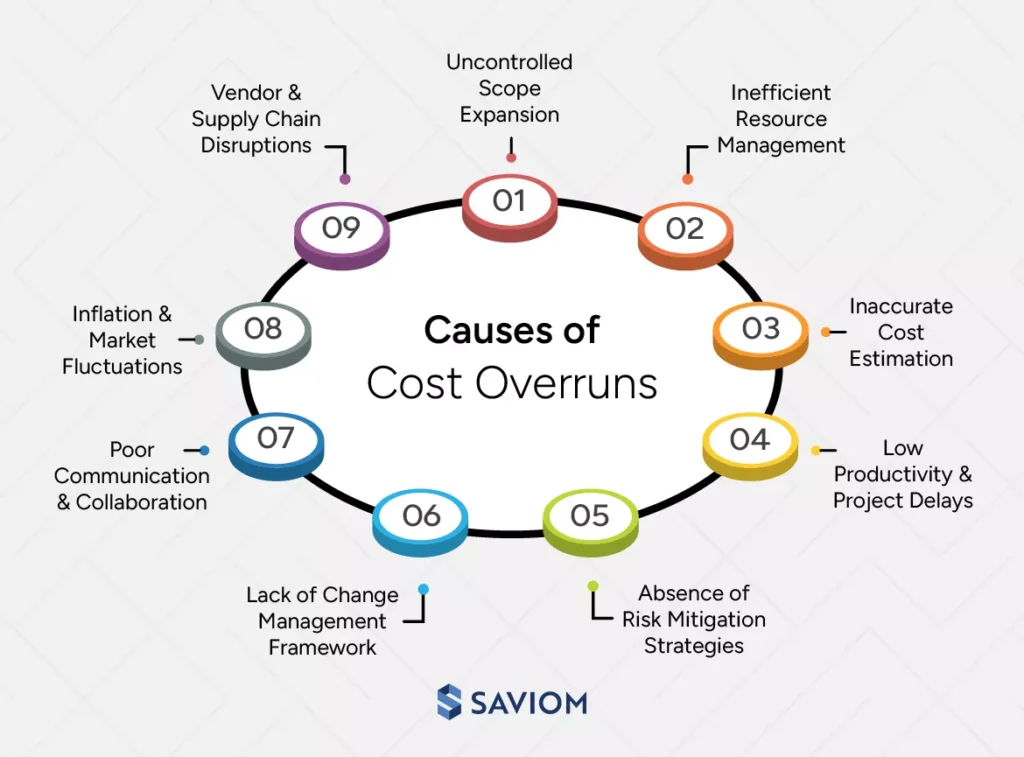
How did it happen? The honest answer is almost always: it started long before execution. The mistakes that cause turnarounds to run over budget and over schedule are rarely dramatic failures. They are quiet, gradual errors — in planning, in discipline, in decision-making — that compound over months until they become a crisis during execution.
After analyzing hundreds of turnaround post-mortems across the refining, chemical, and power industries, the same ten mistakes appear over and over again. Here they are — along with exactly what to do differently.
Mistake 1: Poor Scope Freeze — Adding Work Too Late
This is the single most common cause of turnaround cost and schedule overruns, and it is almost entirely avoidable.
Scope freeze is the discipline of locking the list of work tasks at a defined point — typically 9 to 12 months before execution — so that the planning team has sufficient time to prepare detailed work packages, procure materials, and build an accurate schedule. When new work items are added after scope freeze, all of that preparation has to be redone or rushed.
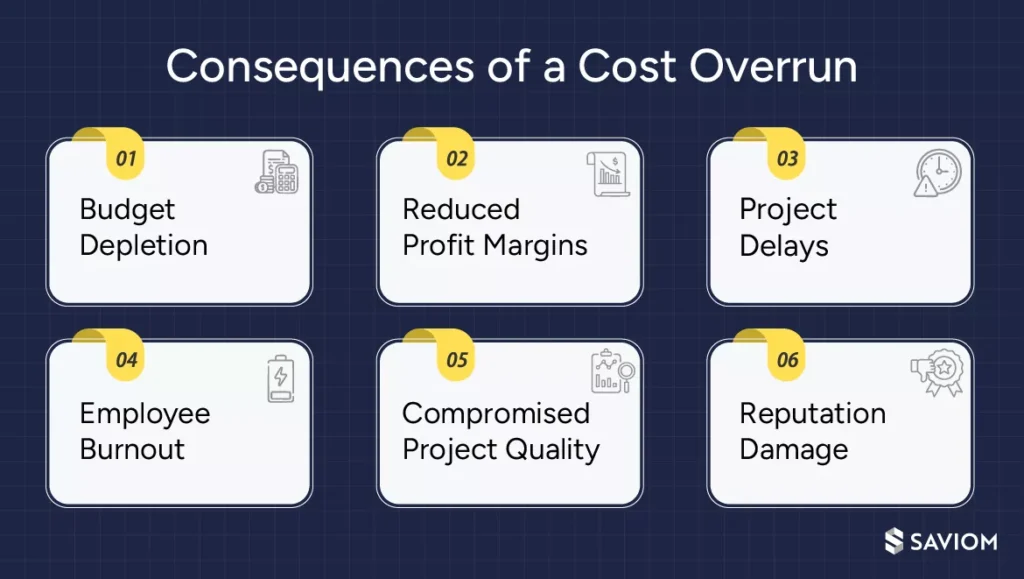
Late scope additions are expensive for multiple reasons. Materials may need to be expedited at premium cost. Work packages may be incomplete, leading to field inefficiencies. Scheduling logic has to be revised, often disrupting well-planned sequences. And critically, the additional hours are never fully reflected in the baseline budget — they appear as overruns.
How to avoid it: Establish a formal scope freeze date and enforce it. All post-freeze additions must go through a change management process with documented justification, cost impact, and schedule impact reviewed by the turnaround manager and client representative before approval. Create a “parking lot” list for items that can be deferred to the next turnaround or handled during an online opportunity.
Mistake 2: Inadequate Contractor Pre-Qualification
Selecting the wrong contractors is one of the most expensive mistakes you can make in turnaround management — and one of the hardest to recover from once execution has started.
An under-resourced contractor who cannot staff their committed peak workforce creates cascade delays across the entire schedule. A contractor with poor supervision ratios produces rework that consumes hours and materials twice. A contractor with a weak safety culture drives up incident rates that halt work, trigger investigations, and destroy morale across the site.
The pressure to award to the lowest bidder is real and understandable — turnaround budgets are enormous and every saving matters. But the cheapest bid rarely produces the cheapest outcome.
How to avoid it: Build a rigorous pre-qualification process that evaluates safety record (TRIR, LTIR over three years), relevant turnaround experience, workforce capacity, supervision structure, and references from similar projects. Only pre-qualified contractors should be allowed to bid. During evaluation, weight safety and capability heavily — price should be a tiebreaker, not the primary criterion. Visit contractor facilities and speak directly with the supervisors who will actually be on your site, not just the business development team.
Mistake 3: Optimistic Scheduling With No Float
Optimism is a valuable quality in most areas of life. In turnaround scheduling, it is a liability.
Many turnaround schedules are built to show the shortest possible duration — because management wants to minimize lost production time and planners feel pressure to present a lean number. The result is a schedule with no contingency, no float, and no margin for the unexpected. And in turnarounds, the unexpected is guaranteed.
Equipment that looked acceptable on paper is found to be severely corroded when opened. A critical gasket arrives with the wrong specification. A crane breaks down during a critical lift. Any one of these events — each entirely normal in a complex maintenance environment — blows up a schedule built with zero margin.
How to avoid it: Build schedule float deliberately. Best-practice organizations carry 10 to 15 percent schedule contingency on the overall duration. Identify the critical path clearly and build extra float specifically around the highest-risk activities. Run schedule risk analysis (Monte Carlo simulation is increasingly common in major turnarounds) to quantify the probability of meeting the planned finish date. Present a realistic schedule to management, along with the cost of the contingency — which will always be less than the cost of a schedule overrun.
Mistake 4: Skipping Pre-Turnaround Inspections and Walkdowns
Pre-turnaround walkdowns — where the planning team, contractors, and operations representatives physically walk every job site together before execution begins — are one of the highest-value activities in the entire planning process. They are also one of the first things cut when time is short.
The cost of skipping walkdowns is paid during execution. Scope items that are not physically verified in advance generate surprises: access is more difficult than the drawing suggested, a piece of equipment is in a different location, the isolation point is not where anyone expected it to be. Each surprise costs time. In aggregate, they cost days.
How to avoid it: Schedule walkdowns as a mandatory planning milestone, not an optional activity. Involve the craft supervisors who will actually execute the work — they will identify practical issues that engineers and planners miss. Document every finding and use walkdowns to validate or correct work package assumptions. Any job that cannot be walked down should carry additional schedule contingency.
Mistake 5: Weak Material Management and Kitting
Ask any experienced turnaround craftsman what wastes the most time during execution, and the answer is almost universally the same: waiting for parts.
A pipefitter standing at a job site waiting for a gasket that was supposed to be kitted and ready is not just losing his own productive hours. In a congested turnaround environment, he may be holding a scaffold, blocking access to another job, and tying up a supervisor who should be elsewhere. The ripple effects of poor material management are felt across the entire schedule.
How to avoid it: Invest in a dedicated material management process. Every work package should have a complete bill of materials. All materials should be ordered, received, inspected, and physically kitted — organized by job number in labeled bins or cages — before execution begins. Target a material readiness rate of 95 percent or higher at scope freeze. Assign a dedicated materials manager with authority and accountability for the warehouse function. Track material availability as a key performance indicator in pre-execution reporting.
Mistake 6: Ignoring Lessons Learned From Previous Turnarounds
Most organizations conduct post-turnaround reviews and produce lessons-learned reports. Far fewer actually read those reports before the next turnaround begins. This is one of the most frustrating patterns in the industry — organizations paying the same tuition repeatedly without banking the knowledge.
The issues documented in lessons-learned reports are specific, actionable, and based on real experience at your specific facility with your specific equipment. They are more valuable than any generic best-practice guide — including this one.
How to avoid it: Make review of the previous turnaround’s lessons-learned report a mandatory first step in new turnaround planning. Assign action owners to every finding and track implementation through the planning process. Build a turnaround knowledge base that accumulates lessons across multiple events. When a new turnaround manager is appointed, ensure they are briefed on historical performance before they begin their own planning.
Mistake 7: Underestimating Safety Coordination Costs
Safety in a major turnaround is not just a moral imperative — it is a significant cost driver that is routinely underestimated in initial budgets.
A major turnaround may bring 2,000 to 5,000 workers onto a site that normally runs with a few hundred. Each of those workers needs to be inducted, badged, briefed, and supervised. The permit-to-work system must process hundreds of permits per day. Safety officers must be present at high-risk activities. Incident investigations, no matter how minor, consume management time and halt work.
When safety coordination costs are underestimated in the planning phase, one of two things happens: the safety program is underfunded (which creates real risk), or the budget overruns because unplanned safety costs are incurred during execution.
How to avoid it: Build a detailed safety resource plan as part of the overall turnaround plan. Estimate the number of safety officers, permit-to-work administrators, and emergency response resources required based on the peak contractor workforce and the nature of the work. Use historical data from previous turnarounds to benchmark safety coordination costs as a percentage of total labor hours. Never treat safety as a line item to be trimmed when the budget is under pressure.
Mistake 8: Lack of a Single Turnaround Manager With Clear Authority
Turnarounds are complex, high-pressure events involving multiple organizations — plant operations, maintenance, engineering, procurement, and dozens of contractors. In this environment, unclear authority is catastrophic.
When decisions require escalation through multiple levels of management, they take hours or days instead of minutes. When responsibility is shared between two or more managers, accountability disappears. When contractors receive conflicting instructions from different plant representatives, they stop work and wait for clarity — which takes time and costs money.
How to avoid it: Appoint a single turnaround manager with clear, documented authority to make decisions during execution — on scope, schedule, cost, and safety. This person must have the respect of both the plant organization and the contractor community, and must be empowered to make real-time calls without constant escalation. The turnaround manager’s authority should be communicated clearly to all parties before execution begins. A RACI matrix defining roles and decision rights is a practical tool for making this explicit.
Mistake 9: Poor Communication Between Operations and Maintenance
Operations and maintenance are the two core functions in any turnaround — and in many organizations, they have a complicated relationship. Operations is focused on getting the plant back online as fast as possible. Maintenance is focused on executing the work safely and correctly. These priorities can create friction that, if unmanaged, has real consequences.
Operations-driven pressure to restart early leads to shortcuts in commissioning and pre-startup checks — which leads to post-startup failures, rework, and sometimes serious incidents. Maintenance teams that do not keep operations informed of progress generate anxiety and mistrust that escalates into interference and micromanagement on the job site.
How to avoid it: Establish a joint operations-maintenance turnaround team with clear roles and shared objectives. Include operations representatives in daily coordination meetings. Build a formal process for operations to validate that equipment is ready to be handed back. Agree on a startup sequence and timeline that both functions have reviewed and signed off on before execution begins. Invest in communication — daily written progress reports, clear escalation paths, and regular briefings for plant leadership.
Mistake 10: Starting Up Too Fast Before Commissioning Is Complete
The pressure at the end of a turnaround is intense. The schedule may be behind. Production revenue is being lost every hour. Management is asking daily when the plant will be back online. In this environment, the temptation to compress or skip commissioning steps is enormous — and dangerous.
Startup incidents are among the most serious events at industrial facilities. Equipment that has been completely disassembled and reassembled by dozens of different workers, under time pressure, in a complex environment, must be systematically verified before process fluids are introduced. Instruments must be calibrated. Safety systems must be tested. Blinds must be confirmed removed. Valves must be in the correct position.
The consequence of missing any one of these steps can range from a minor process upset to a catastrophic explosion or toxic release. Beyond the safety risk, a startup failure that forces the unit back down adds days of additional downtime — far exceeding whatever time was “saved” by rushing commissioning.
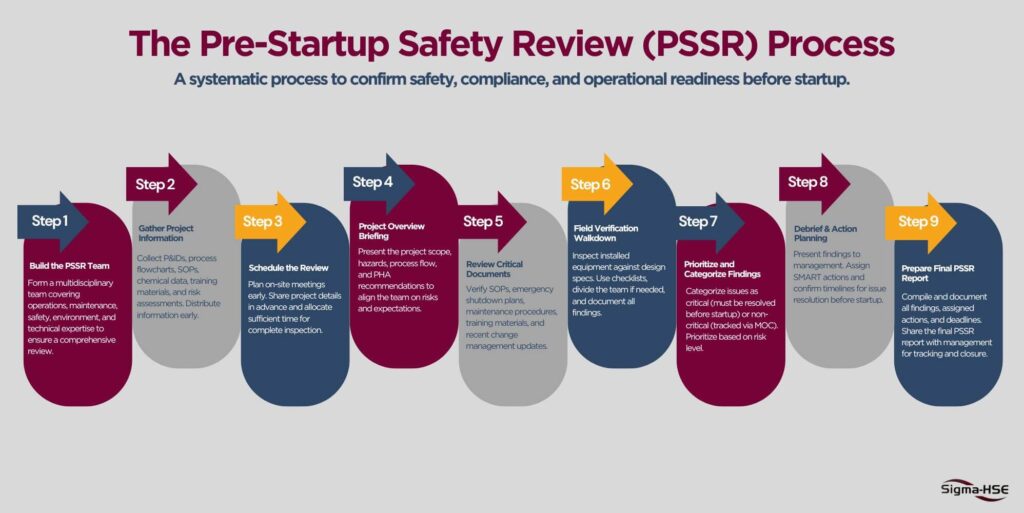
How to avoid it: Build a non-negotiable Pre-Startup Safety Review (PSSR) process into every turnaround. The PSSR must be completed and signed off by operations, maintenance, and engineering before any process fluid is introduced. Build the commissioning and startup sequence into the turnaround schedule — with realistic durations — so that the time required is visible from the beginning, not an afterthought. Communicate to plant leadership that cutting corners on startup creates risk that is not acceptable regardless of schedule pressure.
The Common Thread
Looking across all ten of these mistakes, a pattern emerges: most turnaround overruns are not caused by bad luck or unforeseeable events. They are caused by predictable failures of planning discipline, scope management, and organizational accountability — failures that can be prevented with the right processes and the right leadership.
The organizations that consistently execute turnarounds on time and within budget do not have access to better equipment or smarter engineers. They have better discipline. They enforce scope freeze. They pre-qualify contractors rigorously. They build realistic schedules. They kit materials completely. They learn from the past. And they put a single, empowered manager in charge and hold that person accountable.
That combination — discipline, preparation, and accountability — is what separates world-class turnaround performance from the industry average.
Quick Reference: The 10 Mistakes and Their Root Causes
| # | Mistake | Root cause | Prevention |
|---|---|---|---|
| 1 | Poor scope freeze | Lack of discipline and late decision-making | Enforce formal scope freeze with change control |
| 2 | Inadequate contractor pre-qualification | Cost focus over capability | Rigorous pre-qual process; weight safety heavily |
| 3 | Optimistic scheduling | Management pressure for short durations | Build deliberate float; run schedule risk analysis |
| 4 | Skipping walkdowns | Time pressure in planning phase | Make walkdowns a mandatory planning milestone |
| 5 | Weak material management | Underinvestment in warehouse function | Dedicated materials manager; 95% kitting target |
| 6 | Ignoring lessons learned | No formal process to act on findings | Mandatory lessons-learned review at planning start |
| 7 | Underestimating safety costs | Safety seen as overhead, not planned resource | Detailed safety resource plan; benchmark costs |
| 8 | No single accountable manager | Unclear authority and shared responsibility | Single TA manager with documented decision rights |
| 9 | Operations vs. maintenance friction | Misaligned priorities and poor communication | Joint team; shared objectives; daily coordination |
| 10 | Rushing startup | Schedule pressure overrides safety process | Non-negotiable PSSR; startup sequence in schedule |
Frequently Asked Questions
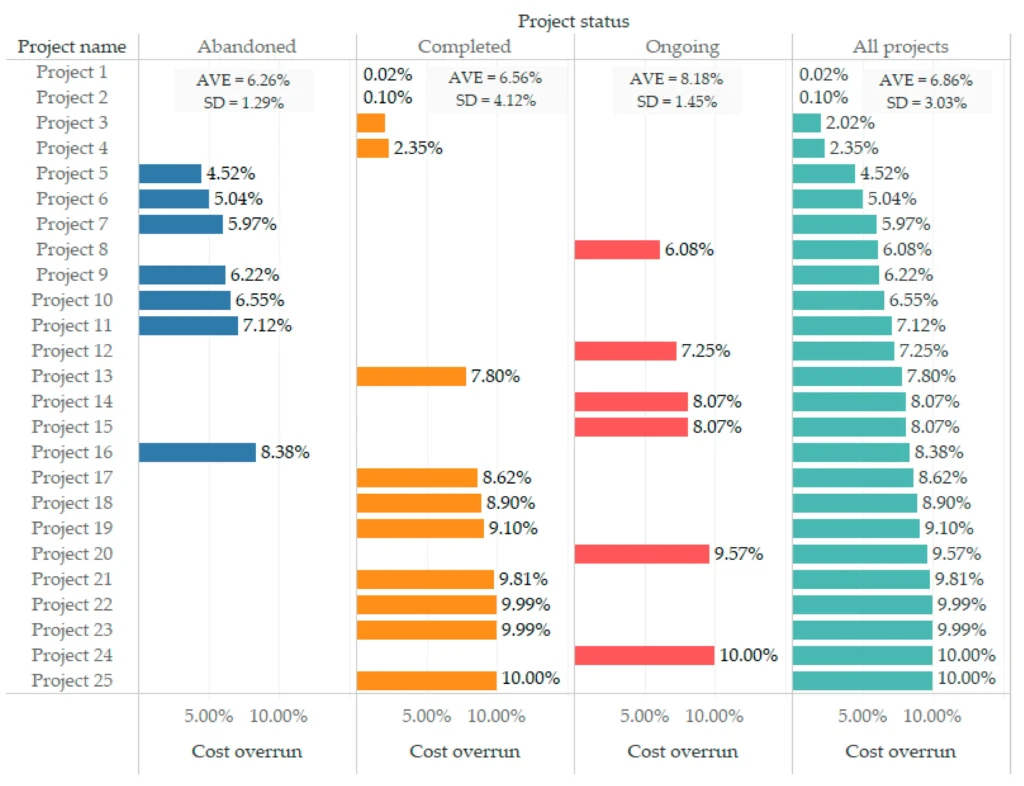
What percentage of turnarounds go over budget? Industry studies consistently show that 60 to 80 percent of major turnarounds exceed their original budget or schedule — often both. The average cost overrun across the industry is estimated at 15 to 25 percent. World-class performers achieve overrun rates below 5 percent through disciplined planning and execution.
How much does scope growth typically add to a turnaround? Discovered scope — work found when equipment is opened that was not known beforehand — typically adds 10 to 20 percent to the planned scope in a well-managed turnaround. In poorly planned events, discovered scope additions can reach 40 percent or more of original scope.
Is it possible to recover a turnaround that is running behind schedule? Yes, but recovery options become more limited and more expensive as the delay grows. Common recovery tactics include adding shifts (moving from 10-hour to 12-hour days), adding craft resources to critical path activities, and re-sequencing non-critical work to free up congested areas. Recovery should always be evaluated against its cost and safety implications.
What is a realistic contingency for a turnaround budget? Most experienced turnaround professionals recommend carrying a 10 to 15 percent contingency on both cost and schedule for a well-planned turnaround. For a first-of-kind turnaround, a new facility, or an event with high uncertainty in the scope, 15 to 20 percent is more appropriate.
Who is responsible when a turnaround goes over budget? Accountability should rest primarily with the turnaround manager, who is responsible for planning and execution. However, overruns almost always have organizational contributors — management pressure that forced an unrealistic budget, a procurement function that did not deliver materials on time, or an operations function that added late scope. Post-mortem analysis should identify systemic causes, not just assign individual blame.
Final Thoughts
Every turnaround overrun has a story behind it — and that story almost always starts months before execution, in a planning meeting where someone made a choice that seemed reasonable at the time. The good news is that all ten of the mistakes described in this article are preventable. None of them require extraordinary resources or technology. They require discipline, experience, and the courage to push back on pressure when the fundamentals are being compromised.
If your last turnaround went over budget, the most valuable thing you can do right now is conduct an honest post-mortem against this list. Chances are, several of these patterns will look familiar.
And if your next turnaround is still in the planning phase — you have time to get it right.
Looking for experienced turnaround planners, schedulers, or contractors who have delivered on budget and on schedule? Browse our directory to find vetted professionals in your industry and region.
Leave a Reply