

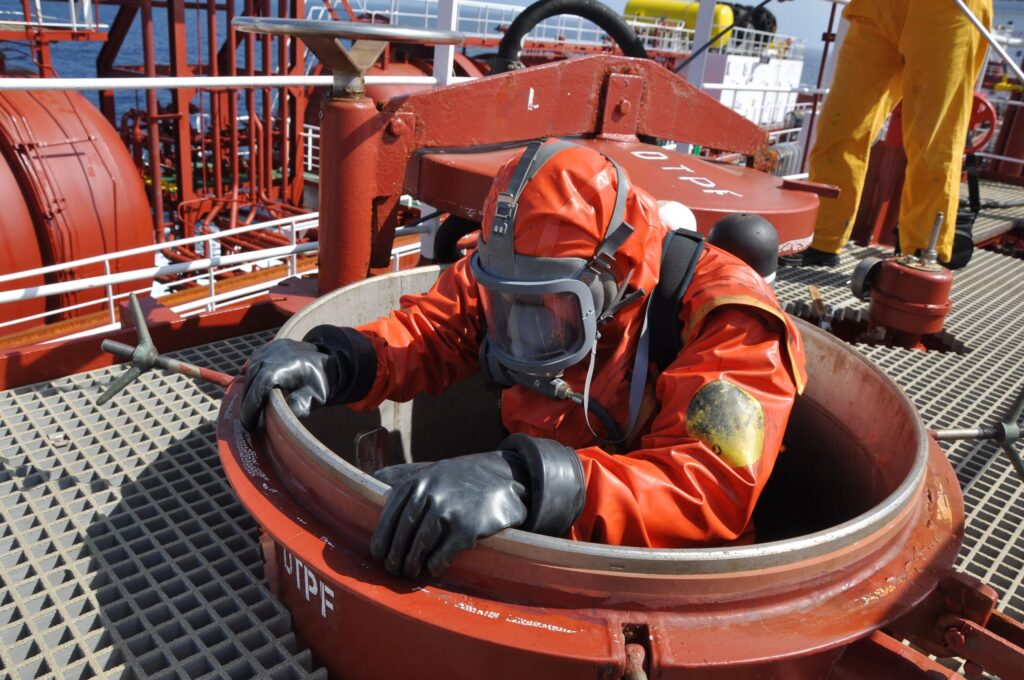
The statistics are sobering. Industrial facilities are statistically most dangerous not during normal operations — but during shutdowns and turnarounds. The combination of unusual tasks, unfamiliar contract workers, time pressure, complex equipment isolations, and simultaneous work activities creates a risk environment that is fundamentally different from day-to-day plant operations.
A refinery or chemical plant that runs safely for years can suffer a serious incident during a two-week turnaround. It happens because the normal rhythms and controls that govern daily operations are disrupted, thousands of new workers arrive on site, and the pressure to finish on schedule can subtly erode safety discipline if leadership is not vigilant.
This guide covers the essential safety procedures that every plant must have in place before, during, and after a shutdown or turnaround — and explains why each one matters.
Why Shutdown Safety Is Different From Normal Operations
During routine plant operations, the workforce is familiar, the tasks are repetitive, the hazards are well understood, and the systems of work are deeply embedded. Workers know the plant. They know the hazards. They know each other.
A turnaround changes all of that:
- Unfamiliar workers — A plant that normally runs with 200 employees may bring in 3,000 contract workers during a turnaround. Most of them have never set foot on that specific site before.
- Unusual tasks — Maintenance work during a turnaround involves opening equipment, entering confined spaces, performing hot work near process residues, and handling hazardous materials in ways that simply do not occur during normal operations.
- Simultaneous operations — Multiple contractors working in close proximity create interface hazards that require careful coordination. A hot work permit issued in one area may be invalidated by activities in an adjacent area.
- Time pressure — Every day of downtime costs money. This creates a constant undercurrent of pressure that, if not actively managed, leads workers and supervisors to take shortcuts.
- Physical and mental fatigue — Long shifts — often 10 to 12 hours per day, seven days a week — accumulate fatigue over the duration of a turnaround, degrading judgment and increasing error rates.

Effective shutdown safety management acknowledges these realities and builds systems to control them.
1. Lock-Out / Tag-Out (LOTO): The Foundation of Shutdown Safety
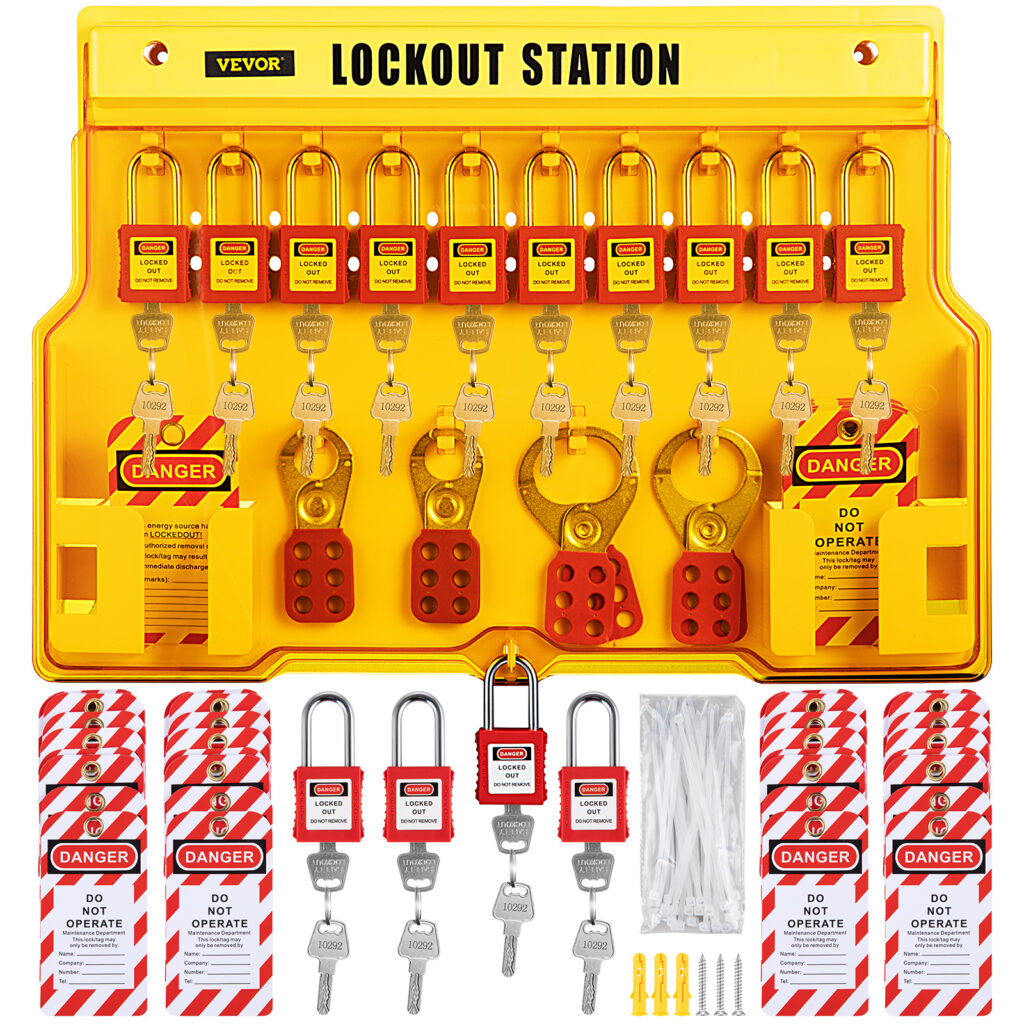
Before any maintenance work begins on any piece of equipment, that equipment must be safely isolated from all energy sources. This is the purpose of Lock-Out / Tag-Out — known universally as LOTO.
What is LOTO?
LOTO is a procedure for isolating equipment from its energy sources — electrical, hydraulic, pneumatic, mechanical, thermal, chemical, or gravitational — and verifying that isolation before work begins. Each isolation point is physically locked with a padlock, and a tag is attached identifying who applied the lock and why.
The critical principle of LOTO is that each worker who is exposed to the hazard applies their own personal lock to the isolation point. A supervisor cannot remove a worker’s lock on their behalf. A worker cannot begin work until they have applied their own lock and personally verified isolation. This one-worker-one-lock principle ensures that no one can inadvertently re-energize equipment while a colleague is working on it.
LOTO in a shutdown context
During a turnaround, the complexity of LOTO multiplies dramatically. A single large piece of equipment may have dozens of isolation points — electrical feeds, process inlets and outlets, steam connections, instrument connections, drain and vent points. The isolation procedure for a major vessel may run to many pages.
Best practice requires:
- Written, equipment-specific isolation procedures developed before the turnaround begins
- A dedicated isolation coordinator responsible for managing the LOTO database
- Physical verification — not just paperwork — that every isolation is in place before work begins
- A formal de-isolation process at the end of the job, with every lock accounted for before equipment is returned to service
OSHA’s Control of Hazardous Energy standard (29 CFR 1910.147) sets the minimum legal requirements for LOTO in the United States. Similar regulations exist in jurisdictions worldwide.
2. Permit to Work (PTW): Controlling What Happens and When
In a major turnaround, hundreds of jobs may be in progress simultaneously across a single process unit. Without a formal system for authorizing and coordinating this work, the potential for conflicts — one crew performing hot work while another is handling flammable materials nearby, for example — is enormous.
The Permit to Work system is the tool that prevents this.
How PTW works
A Permit to Work is a formal document that authorizes a specific crew to perform a specific task at a specific location, subject to defined safety conditions. Before any non-routine work can begin, a permit must be issued by an authorized person — typically a plant representative with knowledge of the area and the hazards.
The permit specifies:
- Exactly what work is to be performed
- The location and equipment involved
- The isolation and safety precautions that must be in place
- The gas testing or other monitoring requirements
- Any special PPE or precautions
- The time period for which the permit is valid
- The names of the workers authorized to perform the work
Types of permits
Different types of work require different permit types, each with its own specific requirements:
- Cold work permits — for non-sparking, non-heat-generating work in areas where flammable or toxic materials may be present
- Hot work permits — for any work that generates heat, sparks, or open flame (welding, grinding, cutting). These require gas testing immediately before work begins and a fire watch during execution
- Confined space entry permits — for entry into any enclosed space with limited access and egress (see below)
- Excavation permits — for any ground-breaking work that may encounter buried services
- Electrical permits — for work on electrical systems, integrating with LOTO procedures
PTW in a shutdown context
Managing the PTW system during a major turnaround is a significant operational challenge. A large turnaround may process 300 to 500 permits per day. The PTW office becomes a critical nerve center, and the permit coordinators who manage it must be experienced, disciplined, and well-resourced.
Key best practices for shutdown PTW management:
- Pre-prepare permit templates for all known jobs during the planning phase
- Implement a PTW software system that provides real-time visibility of all active permits and their locations
- Conduct daily permit audits to verify that field conditions match permit requirements
- Establish clear rules for simultaneous operations — which work combinations are never permitted in adjacent areas
3. Confined Space Entry: One of the Highest-Risk Activities in Any Turnaround
More workers are killed in confined space incidents than almost any other category of industrial accident. Tragically, a significant proportion of confined space fatalities are rescuers — people who entered without proper preparation to help a colleague in distress.
What is a confined space?
A confined space is any space that is large enough for a worker to enter and perform work, has limited means of entry or exit, and is not designed for continuous occupancy. In an industrial plant, confined spaces include:
- Pressure vessels and reactors
- Storage tanks
- Heat exchanger shells
- Columns and towers
- Sewers, sumps, and pits
- Pipe sections and ducts
A permit-required confined space is one that also contains or has the potential to contain serious hazards — toxic or flammable atmospheres, engulfment hazards, or configuration hazards (inwardly converging walls, sloping floors). Almost all confined spaces in a process plant fall into this category.
Essential confined space entry requirements
Before any worker enters a confined space, the following must be in place:
- Atmospheric testing — the atmosphere inside the space must be tested for oxygen content (must be between 19.5% and 23.5%), flammable gases (must be below 10% of lower explosive limit), and toxic substances (carbon monoxide, hydrogen sulfide, and any process-specific hazards). Testing must be performed by a competent person using calibrated equipment.
- Ventilation — forced air ventilation must be established to maintain a safe atmosphere throughout the entry
- Isolation — all process connections must be blinded and locked out, not just closed with a valve
- Entry permit — a formal confined space entry permit must be issued and posted at the entry point
- Attendant — a trained attendant must be stationed at the entry point at all times while workers are inside. The attendant must never enter the space.
- Rescue plan — a documented rescue plan with trained rescuers and appropriate equipment must be in place before entry begins. Non-entry rescue methods should be used wherever possible.
- Communication — continuous communication must be maintained between workers inside and the attendant outside
4. Hot Work Permits and Fire Watch
Welding, cutting, grinding, and other hot work activities generate sparks and heat that can ignite flammable materials — including process residues that remain in equipment even after it has been drained and cleaned.
Hot work requirements
Every hot work job during a shutdown requires:
- Gas testing immediately before work begins — performed by a competent person with a calibrated gas detector. If flammable gas is detected above 10% of the lower explosive limit, work must not proceed.
- Fire watch — a dedicated person positioned to observe the work and the surrounding area for signs of fire. The fire watch must have appropriate fire suppression equipment immediately available and must remain at the job site for at least 30 minutes after hot work concludes (embers and hot metal can ignite fires after the work stops).
- Area clearance — flammable materials within the defined hot work radius must be removed or protected before work begins
- Coordination with adjacent operations — the PTW system must ensure that no incompatible activities are occurring in adjacent areas

5. Safety Induction for Contract Workers
Every contract worker who enters the site during a turnaround must complete a safety induction before performing any work. This is not a formality — it is a genuine safety intervention.
What an effective induction covers
- Site-specific hazards: what process materials are present, where the high-risk areas are, what the emergency assembly points are
- The permit-to-work system: how it works, what workers’ responsibilities are, and what to do if they are asked to work without a permit
- Emergency procedures: evacuation routes, muster points, emergency contact numbers, how to report an incident
- Site rules: speed limits, PPE requirements, prohibited areas, drug and alcohol policy
- LOTO awareness: workers must understand the principle that they must never operate any isolation point or remove any lock that is not their own
For a major turnaround, the induction process may need to handle hundreds of new workers per day at peak mobilization. This requires dedicated facilities, trained induction personnel, and an efficient system for tracking who has been inducted and when.
6. Hazard Identification and Job Safety Analysis (JSA)
For every non-routine task performed during a turnaround, a Job Safety Analysis (JSA) — also called a Job Hazard Analysis (JHA) — should be completed before work begins.
A JSA breaks the task down into individual steps and identifies the specific hazards associated with each step, along with the controls that will be applied to manage those hazards. It is completed by the supervisor and the crew who will actually perform the work — not by a safety officer in an office.
This participatory approach is important: the workers doing the job know its practical hazards better than anyone, and involving them in the JSA builds ownership of the safety controls.
When JSA is most critical
JSAs are particularly important for:
- First-time tasks — jobs that have not been done before at this facility
- High-energy tasks — work involving high-pressure lines, electrical systems, or heavy lifts
- Complex isolations — jobs with many energy sources that must all be controlled
- Interface tasks — work at the boundary between two contractors or two work areas
7. Emergency Response Planning for Shutdown Conditions
The emergency response plan that serves the plant during normal operations is not adequate for shutdown conditions. The elevated workforce, unusual activities, and changed site configuration all require a specific emergency response plan for the turnaround period.
Key elements of a shutdown emergency response plan
- Updated evacuation routes — temporary structures, contractor vehicles, and material laydown areas may block normal evacuation routes. Updated routes must be communicated to all workers.
- Muster point management — with thousands of workers on site, accounting for all personnel after an evacuation requires a disciplined roll-call process and enough muster points to prevent dangerous congestion
- Medical resources — a first aid facility with trained medical staff should be on site during peak workforce periods. The response time for external emergency services may be too long to manage serious injuries
- Fire response — the location and operation of fire suppression equipment must be communicated to all workers, and the plant’s fire team must be prepared for the types of incidents (hot work fires, chemical releases) that are more likely during a shutdown
- Emergency communication — every worker on site must know who to call and how to call them in an emergency. Radio communication systems must have sufficient capacity for the turnaround workforce.
8. Fatigue Management
Fatigue is a significant and often underappreciated safety risk in turnarounds. The combination of long shifts, physically demanding work, travel from remote locations, and the cumulative effect of working seven days a week for three to five weeks creates a workforce that is progressively less alert, less coordinated, and more prone to errors and incidents.
Fatigue management practices
- Shift length limits — most best-practice organizations cap turnaround shifts at 12 hours, with a mandatory minimum of 10 hours off between shifts
- Rest day requirements — a minimum of one rest day per week should be required for all workers, regardless of schedule pressure
- Fatigue monitoring — supervisors should be trained to recognize signs of fatigue in their crews and empowered to stand workers down if necessary
- Accommodation standards — workers who travel to the site and live in temporary accommodation should have quiet, comfortable facilities that allow genuine rest between shifts
Common Shutdown Injuries and How to Prevent Them
Understanding the most common injury types helps focus safety efforts where they matter most:
Struck-by incidents — workers struck by tools, equipment, or materials dropped from height. Prevention: exclusion zones around elevated work, tool tethering at height, hard hat requirements throughout the site.
Falls from height — falls from scaffolding, ladders, and elevated work platforms. Prevention: 100% tie-off requirement at height, scaffold inspection before use, competency requirements for scaffold erection.
Chemical exposure — contact with process residues, cleaning chemicals, or hazardous substances. Prevention: chemical-specific PPE requirements, decontamination procedures, atmospheric monitoring.
Hand and finger injuries — the most statistically common injury type in maintenance work. Prevention: cut-resistant gloves, pinch point awareness training, tool quality standards.
Musculoskeletal injuries — strains and sprains from manual handling in awkward spaces. Prevention: mechanical lifting aids, task rotation, manual handling training.
Frequently Asked Questions
Who is responsible for safety during a turnaround — the plant or the contractors? Both. The plant owner retains ultimate responsibility for safety on their site and must set the safety standards, provide the permit-to-work system, and enforce compliance. Each contractor is responsible for the safety management of their own workforce. A formal contractor safety management framework — including pre-qualification, induction, permit compliance, and performance monitoring — defines how these responsibilities interface.
What is a safety golden rule? Many organizations establish a set of absolute safety rules — called golden rules or life-saving rules — that apply to all workers on site without exception. Common examples include: never work without a valid permit, never bypass a safety device, never work under a suspended load, always wear required PPE. Violation of a golden rule is typically grounds for immediate removal from site, regardless of the worker’s role or seniority.
How is safety performance measured during a turnaround? Both lagging indicators (injuries and incidents that have already occurred) and leading indicators (near-miss reports, permit compliance rates, toolbox talk attendance, safety observations) are used. Leading indicators are more valuable for active safety management because they identify problems before they result in injury.
What does a safety moment mean in a turnaround context? A safety moment is a brief (2–5 minute) discussion of a safety topic at the start of a meeting or shift. During a turnaround, safety moments are typically held at every daily coordination meeting and every crew toolbox talk. They reinforce safety culture, share lessons from recent incidents, and keep safety top of mind during a demanding operational period.
Final Thoughts
Shutdown safety is not a compliance exercise. It is the foundation on which everything else in a turnaround is built. A facility that sends every worker home safely and executes its maintenance work to specification has achieved the most important outcome of the event — everything else is secondary.
The procedures described in this article — LOTO, PTW, confined space entry, hot work controls, safety induction, JSA, emergency planning, and fatigue management — are not optional extras. They are the baseline standard for any professionally managed turnaround. Organizations that treat them as such, and invest in the leadership and resources required to implement them genuinely rather than on paper, consistently achieve both better safety outcomes and better project performance.
Safety and efficiency are not in tension. A safe turnaround is a well-run turnaround.
Looking for HSE specialists, safety consultants, or safety-qualified contractors for your next shutdown? Browse our directory to find vetted professionals across all major industrial sectors.
Leave a Reply