

Every industrial plant, refinery, or manufacturing facility eventually has to stop. Not because something went wrong — but because stopping is the only way to keep everything running safely for years to come. That intentional stop is what the industry calls a plant shutdown, and knowing how to plan, execute, and recover from one can be the difference between a smooth restart and a costly, dangerous nightmare.
Whether you’re new to the industry or a seasoned maintenance engineer looking to sharpen your vocabulary, this guide covers everything you need to understand about plant shutdowns: what they are, why they happen, who runs them, and what separates a successful one from a disaster.
What Is a Plant Shutdown?
A plant shutdown is a planned or unplanned cessation of operations at an industrial facility. During a shutdown, production stops entirely — or in some cases, unit by unit — so that maintenance, inspection, repairs, and upgrades can be performed on equipment that cannot be safely serviced while the plant is running.
Shutdowns are common across a wide range of industries:
- Oil and gas refineries shut down process units for catalyst replacement, vessel inspections, and heat exchanger cleaning
- Chemical plants stop production to overhaul reactors, piping systems, and safety-critical pressure vessels
- Power plants take generating units offline for boiler tube replacements, turbine overhauls, and regulatory inspections
- Pharmaceutical facilities shut down for equipment validation, deep cleaning, and process upgrades
- Food and beverage plants go offline for sanitation overhauls and capital improvement projects
In short, if a facility runs continuously and contains equipment that wears, corrodes, or degrades over time, shutdowns are not optional. They are a fundamental part of asset lifecycle management.
Shutdown vs. Turnaround vs. Outage: What’s the Difference?
These three terms are often used interchangeably, but they carry different meanings depending on the industry and context. Here’s how most experienced professionals distinguish them:
Plant Shutdown
A broad term for any planned or unplanned stop in production. It can refer to a single piece of equipment being taken offline or an entire facility going dark. Shutdowns can last hours, days, or months.
Turnaround (TA)
A turnaround is a specific type of planned shutdown — typically large-scale, involving the complete shutdown of a process unit or entire plant for a defined scope of maintenance and inspection work. Turnarounds are highly organized events with dedicated project teams, contractor workforces that can number in the thousands, and budgets that often reach into the tens of millions of dollars.
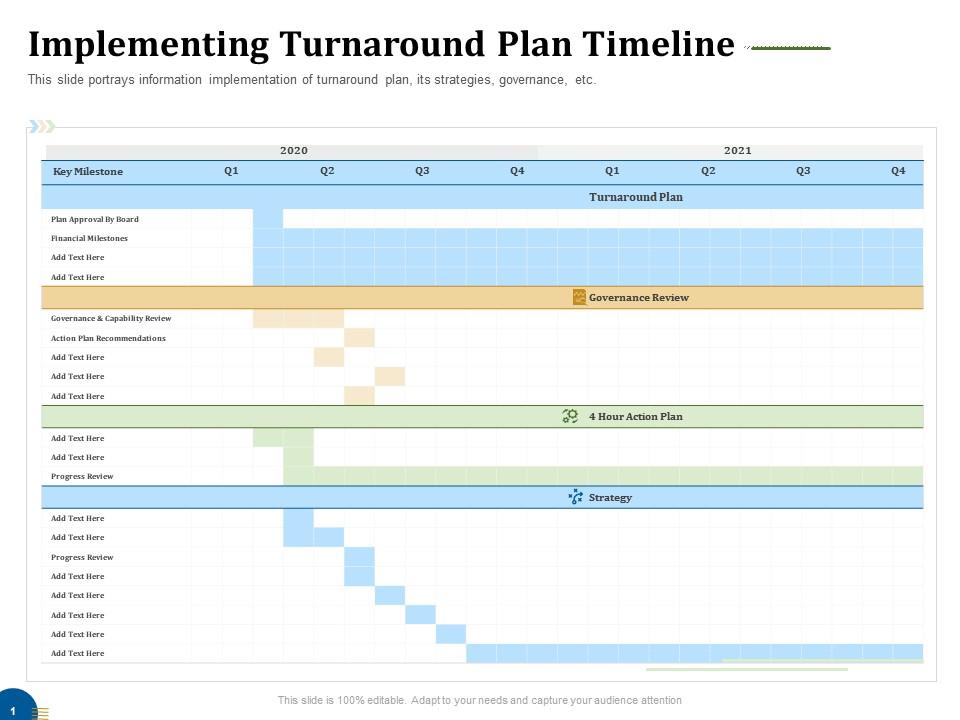
The word “turnaround” reflects the idea of taking the plant from a running state, stopping it, performing work, and then turning it back around to a running state — all within a tightly managed schedule.
Outage
The term “outage” is most commonly used in the power generation industry. A planned outage at a power station serves the same purpose as a turnaround at a refinery — it is a scheduled stop to perform maintenance that cannot be done during normal operations. “Forced outage” or “unplanned outage” refers to an unexpected stop due to equipment failure or a safety incident.
The practical bottom line: all turnarounds are shutdowns, but not all shutdowns are turnarounds. An outage is simply a power industry synonym for a major planned shutdown.
Planned vs. Unplanned Shutdowns
This distinction matters enormously — both for safety and for cost.
Planned Shutdowns
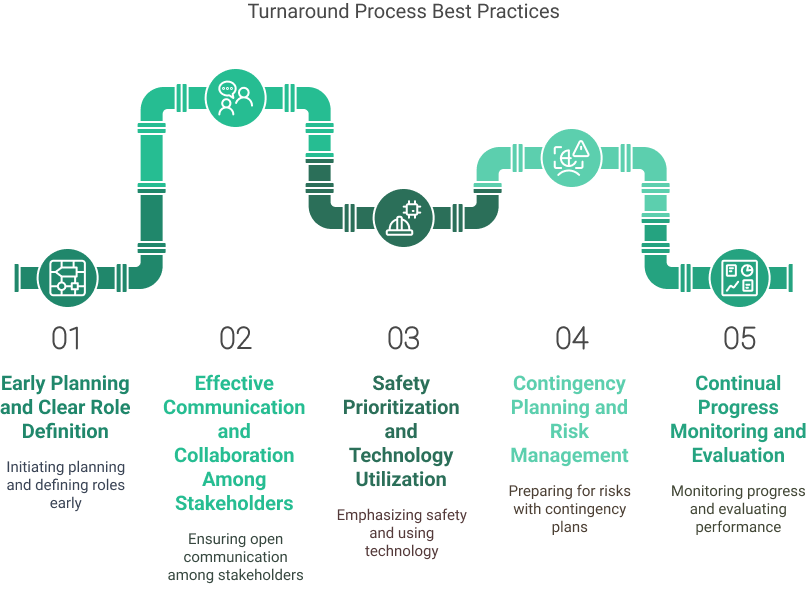
A planned shutdown is scheduled well in advance, often 18 to 36 months before the actual execution date. This lead time exists because the work required is complex: scoping, engineering, procurement of long-lead materials, contractor selection, permitting, and detailed scheduling all take time.
Planned shutdowns allow facilities to:
- Bundle maintenance work efficiently to minimize lost production time
- Procure materials and specialist contractors at competitive rates
- Train the workforce and prepare detailed work packages before execution begins
- Meet regulatory inspection intervals set by jurisdictions and insurance bodies
The goal is to do as much as possible in the shortest safe window, then restart cleanly.
Unplanned Shutdowns
An unplanned shutdown — sometimes called an emergency shutdown or forced outage — happens when equipment fails unexpectedly, a safety system activates, or a process upset forces the plant to stop. These events are costly and disruptive precisely because none of the preparation that makes planned shutdowns efficient has taken place.
Materials may not be in stock. Specialist contractors may not be available. The full scope of damage may not be known. An unplanned shutdown that takes three days to recover from in a well-prepared planned event might stretch to three weeks when it happens without warning.
This is one of the core arguments for investing heavily in planned turnaround management: every dollar spent planning is a hedge against the catastrophic cost of unplanned failure.
Key Phases of a Plant Shutdown
A well-run plant shutdown doesn’t start when the plant stops. It starts months — sometimes years — before. Most professionals in the industry recognize the following phases:
1. Scoping (18–24 months out) The maintenance and engineering teams identify all the work that needs to be done: which vessels need inspection, which exchangers need cleaning, which valves need replacement. This is called “scope development,” and freezing the scope at the right time is one of the most critical — and most difficult — disciplines in shutdown management.
2. Planning and Engineering (12–18 months out) Work packages are developed, engineering drawings are reviewed, materials are identified, and work procedures are written. This is where the detailed logic of how the shutdown will actually unfold gets defined.
3. Procurement and Contracting (9–12 months out) Long-lead materials are ordered. Contractors are selected through a bid and qualification process. This phase is where the commercial commitments are made.
4. Pre-Turnaround Execution Preparation (3–6 months out) Detailed scheduling is finalized using critical path methods. Scaffolding, tool, and equipment plans are developed. Safety inductions are planned. Work permits are prepared. Mock-up and walkdown activities take place.
5. Execution The plant stops, and the work begins. This phase is measured in days or weeks, not months. Daily coordination meetings — often called “lookback” and “lookahead” meetings — keep hundreds or thousands of workers aligned to the schedule.
6. Startup and Post-Turnaround Review Systems are recommissioned, equipment is tested, and the plant is gradually returned to service. After startup, the team conducts a formal lessons-learned exercise to capture what went right and what needs to change next time.
Who Runs a Shutdown? Key Roles Explained
A major turnaround involves a complex web of plant employees, specialist contractors, and third-party service providers. Here are the key roles you’ll encounter:
Turnaround Manager The overall accountable leader. The turnaround manager owns the schedule, the budget, and the safety performance of the event. This is typically a senior role held by someone with deep maintenance or engineering experience.
Turnaround Planner / Scheduler The person responsible for building and maintaining the detailed work schedule. A skilled scheduler uses tools like Primavera P6 or Microsoft Project to manage the critical path and ensure that every trade has the materials, permits, and access they need at the right time.
Field Engineer Field engineers provide technical support during execution — resolving unexpected findings, approving scope changes, and ensuring work is performed to the correct specifications.
Safety Officer / HSE Lead Responsible for permit-to-work systems, safety inductions for contractors, incident investigations, and overall compliance with safety regulations during the shutdown.
Contractor Superintendent Each major contractor will have a superintendent on site who manages their own workforce and interfaces with the plant’s turnaround team.
Operations Representative Someone from the plant’s operations team who manages the safe isolation of equipment, validates that systems are properly prepared for maintenance entry, and eventually signs off on return to service.
How Long Does a Shutdown Take?
Duration varies enormously depending on the type of facility, the scope of work, and how well the event was planned.
- Minor shutdowns at a single unit or system: 2–7 days
- Intermediate turnarounds covering a process area: 2–4 weeks
- Major refinery or chemical plant turnarounds: 3–8 weeks
- Large power plant outages: 4–10 weeks
Historically, the industry has gotten better at compressing turnaround durations through better planning, parallel work execution, and improved contractor management. A turnaround that took six weeks fifteen years ago might be executed in four weeks today with the same scope — because the planning work that used to happen during execution now happens months in advance.
What Does a Shutdown Cost?
Shutdown costs fall into two broad categories: direct costs and opportunity costs.
Direct costs include all the labor, materials, equipment rental, scaffolding, specialist services, and project management associated with executing the work. A major refinery turnaround can easily cost $50 million to $150 million or more in direct costs.
Opportunity costs — the revenue lost while the plant isn’t producing — are often just as significant. A refinery processing 100,000 barrels per day at a $10 per barrel margin loses $1 million per day of downtime. This is why every day saved during execution has enormous financial value, and why schedule overruns are treated as serious failures.
Common Challenges in Plant Shutdowns
Even experienced teams struggle with some recurring problems:
Scope creep — Additional work discovered during execution inflates the schedule and budget. Some scope growth is unavoidable (you can’t know what you’ll find until you open the equipment), but poor discipline during scope freeze makes it much worse.
Contractor workforce management — Managing thousands of workers from dozens of companies in a constrained site area is a genuine logistical challenge. Congestion, coordination failures, and resource conflicts are constant risks.
Material availability — A single missing part can hold up an entire job. Effective material management and kitting before execution begins is essential.
Safety incidents — The shutdown period is statistically the most dangerous time at an industrial facility. Unusual tasks, unfamiliar workers, time pressure, and complex isolations all increase risk. Safety leadership must be at its strongest during execution.
Frequently Asked Questions
How often do plants have turnarounds? Most process facilities run on turnaround cycles of 2 to 5 years, depending on regulatory requirements and equipment condition. Refineries typically target 4–5 year cycles; chemical plants may run on 2–3 year cycles.
What’s the difference between a turnaround and routine maintenance? Routine maintenance happens while the plant is running. Turnaround work can only be done when the plant is shut down — because the equipment must be isolated, depressurized, and cooled before workers can safely enter it.
What software is used to manage turnarounds? Common tools include Primavera P6 (scheduling), SAP PM (work order management), Prometheus (turnaround-specific planning and estimating), and Cleopatra Enterprise (cost estimating and benchmarking).
Can a plant avoid shutdowns altogether? No. Regulatory authorities in most jurisdictions require periodic inspection of pressure vessels, boilers, and safety-critical equipment. Beyond legal requirements, the alternative to planned maintenance is unplanned failure — which is far more dangerous and expensive.
What certifications are relevant to shutdown work? Common certifications include OSHA 30-Hour Construction or General Industry (safety), CMRP (Certified Maintenance and Reliability Professional), PMP (Project Management Professional), and various trade certifications for specific crafts (welding, NDT, electrical).
Final Thoughts
A plant shutdown is far more than a pause in production. It is a precision-managed engineering event that determines how safely and efficiently a facility can operate for the next several years. The best-run shutdowns look almost routine from the outside — work completes on schedule, teams restart cleanly, and the plant comes back stronger than it went down.
Getting there requires months of disciplined preparation, skilled people in the right roles, and a relentless focus on safety throughout execution.
If you’re looking for qualified contractors, specialist service providers, or industry professionals to support your next shutdown or turnaround, explore the listings in our directory — built specifically for the shutdown and turnaround community.
Have a question about shutdown planning or turnaround management? Browse our directory to find specialists in your region and industry.
Leave a Reply